Understanding the Gallbladder and When Removal May be Necessary
Posted on October 16, 2026
Understanding the Gallbladder and When Removal May be Necessary
About the Gallbladder?
The gallbladder is a small organ located below the liver that stores bile. The gallbladder is an important tool for digestion because it stores, concentrates and releases bile to help break down fatty foods.
The gallbladder, although useful, is non-essential and can be surgically removed if necessary. This is called a cholecystectomy. An article in the National Institute of Medicine states, ”It is estimated that around 934,000 cholecystectomies are conducted annually in the United States alone.” Gallbladder issues are also statistically more common in women.
Signs and Symptoms That a Patient Might Need a Gallbladder Removal?
Many adverse gastrointestinal issues can be linked to the functionality of a person’s gallbladder. The following are common symptoms that could be associated with the gallbladder:
- Frequent nausea, especially after eating
- Frequent and hard-to-treat gas, bloating and indigestion
- Sharp pain in the upper right side of the abdomen
- This pain can often radiate to a person’s back or other areas
Often, these symptoms are caused by one or more gallbladder-related issues, including the following:
- Inflammation of the gallbladder
- Gallbladder polyps
- Most polys are harmless and mostly comprised of cholesterol deposits. In some cases, however, polyps can turn cancerous. For this reason, a physician may sometimes suggest the removal of the gallbladder entirely if large polyps are present.
- Suspected cancer in the area
- Gallstones
- These stones can vary in size and cause what many patients describe as “attacks” during which sharp, intense pain presents suddenly and persists for a short time.
- Gallstones can, however, eventually migrate to the bile duct and in some cases, clog the bile duct. This is called Choledocholithiasis and requires immediate medical attention.
- General dysfunction
- Sometimes a patient’s gallbladder is just dysfunctional and will not release bile in a normal way, which creates discomfort and digestive issues.
Ultimately, a physician would need to evaluate a patient’s condition using physical exams and/or imaging to determine what the actual underlying gallbladder issue may be. In some cases, someone experiencing issues with the function of their gallbladder can manage their condition without surgical intervention. In many cases, however, surgery may be the best option.
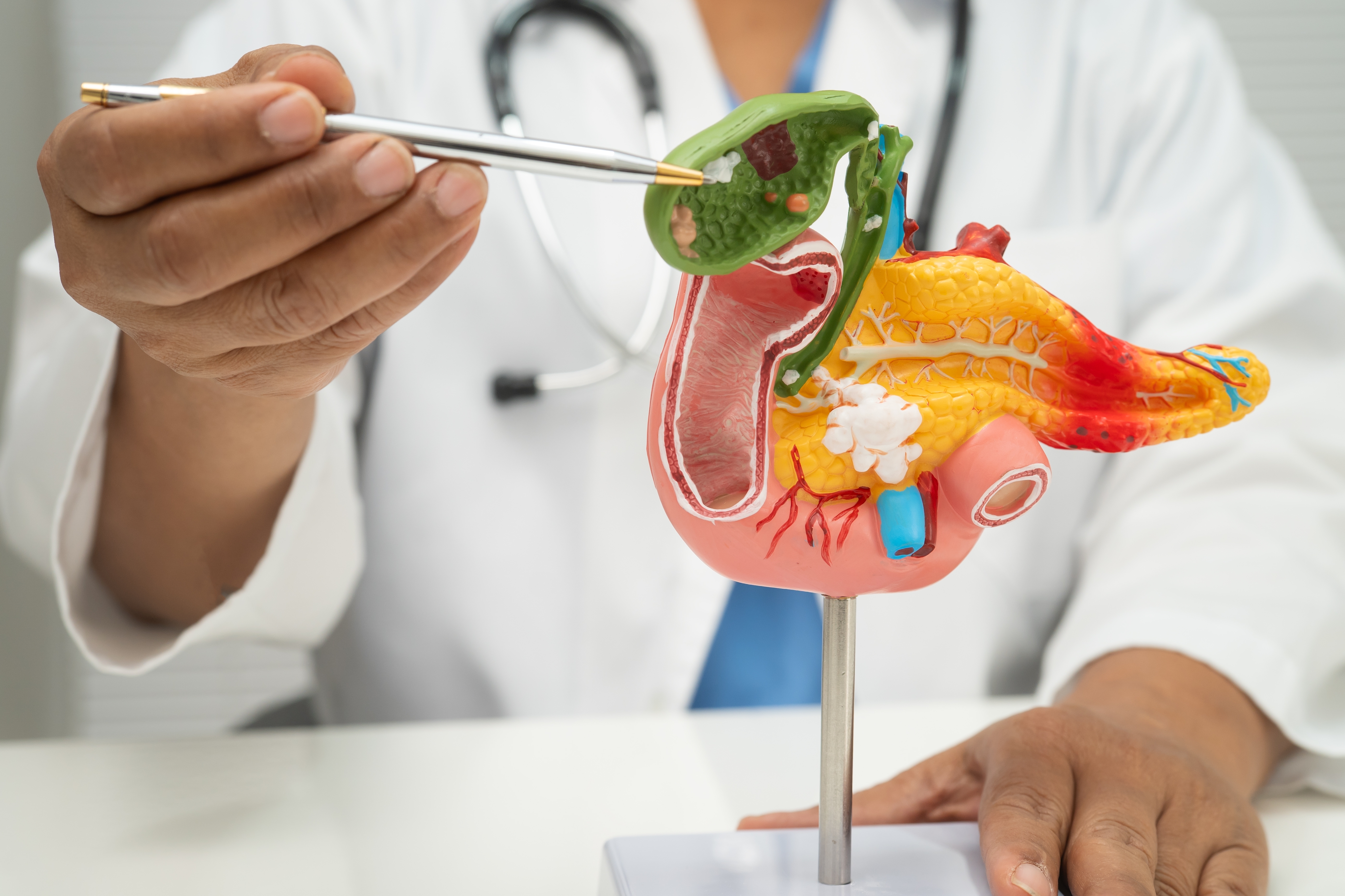
Cholecystectomy Explanation:
This procedure is generally quite safe and, in most cases, can be done under general anesthesia as a minimally invasive surgery.
- Minimally invasive surgery- The surgeon makes several small incisions and inserts narrow, hollow tubes along with a laparoscope—a small camera that provides a live view of the surgical area. Surgical instruments are then guided through these tubes, allowing the surgeon to remove the gallbladder using either hand-controlled tools or robotic assistance.
In some cases, surgeons might need to do Open Surgery.
- Open Surgery-The doctor creates a large incision across the abdomen through which to remove the gallbladder.
Patients who undergo minimally invasive surgery are able to go home within 24 hours of surgery, and those who need open surgery typically spend three to five days in the hospital.
Cholecystectomy Risks:
- Bile leaks from the liver or gallbladder
- Post-surgical bleeding or infection
- Trapped gallstones
- If gallstones do not pass through the bile duct on their own, the patient will need to have them surgically removed
- Accidental injury to the bile duct or the intestines, which are both near the gallbladder
- This is a rare complication that will require repair
What Changes Post-Surgery?
Most people experience relief from many of their gastrointestinal symptoms, such as abdominal pain, nausea and vomiting post-surgery.
Once a person has had their gallbladder removed, their liver continues to produce bile. The one difference is that instead of transporting that bile to the gallbladder to be released when needed, it is now released continuously into the small intestine. It is normal for patients to temporarily modify their diets while adjusting to this change.
Support and Surgical Care at South Central General Surgery
South Central General Surgery’s experienced team of surgeons offer a wide variety of surgical services. If you suspect you might need gallbladder surgery, ask your primary physician for a referral.
If you have any questions, please call South Central General Surgery at 601-649-7802.