Minimally Invasive Surgery
Posted on August 31, 2026
Minimally Invasive Surgery
For many years, open surgery was the standard approach worldwide. Over the past 50 years, however, minimally invasive surgery has rapidly advanced and become a preferred option for many procedures.
At South Central, minimally invasive techniques are now routine. A wide range of surgeries can be performed this way, consistently leading to better outcomes, faster recovery and improved patient comfort.
What is Minimally Invasive Surgery?
Minimally invasive surgery is an umbrella term for procedures performed without the need for a large incision. While new minimally invasive techniques continue to emerge across the United States, the core principle remains the same: surgery is carried out through a series of smaller openings rather than one large opening.
When conducting minimally invasive surgery, the surgeon makes several small incisions and inserts narrow, hollow tubes along with a laparoscope—a small camera that provides a live view of the surgical area.
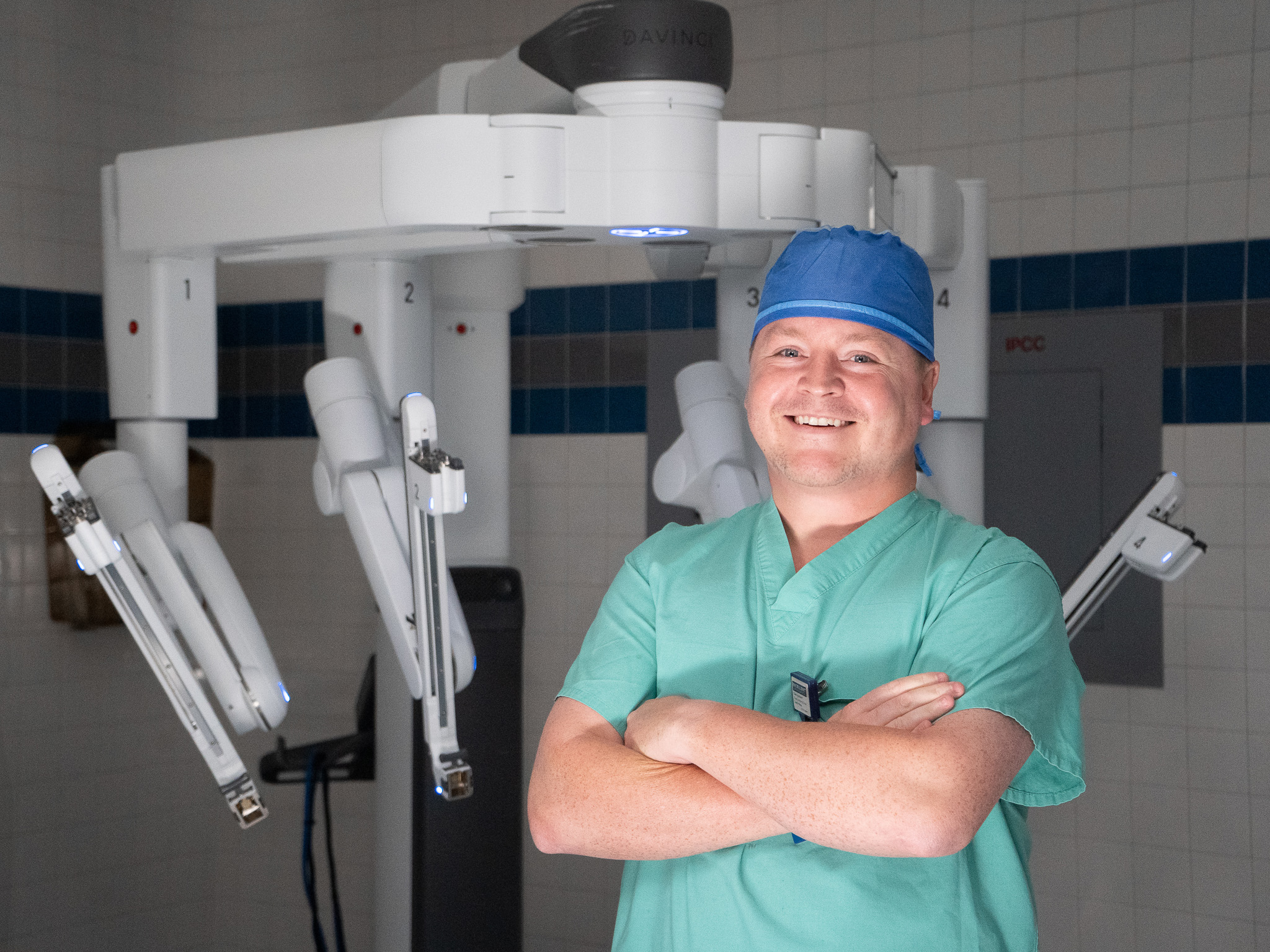
Surgical instruments are then guided through these tubes, allowing the surgeon to remove the appropriate tissue. Surgeons can then either hand-control their surgical tools or use robotic assistance, which means the surgeon controls the tools from a console located inside the surgical suite.
Robotic assistance gives surgeons better precision and a greater range of motion. Robotic assisted is commonly used in prostate, gynecologic, colorectal and hernia surgeries.
How Does Minimally Invasive Surgery Help the Patient?
- Smaller incisions
- Less scaring/ scar tissue
- Shorter recovery times
- Less postoperative pain
- Smaller wounds create less pain
- Lower complication rates
When Is Minimally Invasive Surgery Not an Option?
Although minimally invasive surgery can be beneficial to the patient, it is important to note that it is not always the best option. In situations where surgery is exploratory, the patient’s anatomy is complex or the surgery is an emergency, the surgeon typically elects to do open surgery.
Need More Information?
For more information about South Central General Surgery, please click here.